Ireland Travel Tips: How to Get Around, Weather and More!

Ireland travel tips: everything you need to know before you go! Ireland is such a fun country to visit, with its culture being as vibrant as its green grass! However, there are some things to know before you visit.
For instance, the Emerald Isle is split into the Republic of Ireland and Northern Ireland (which is now part of the UK.) This means you will need different currency in Northern Ireland than you do the rest of the island.
We rented a car and drove all the way around the Emerald Isle and learned a thing or two along the way!
Here is everything you need to know including the best time to visit Ireland, weather on the Emerald Isle, what to pack for Ireland, currency you will need, how to get around Ireland and more!
Work on Monday Travels is supported by readers and, at no cost to you, may earn commission when you book or purchase using our links. Full disclosure found here.
The Best Time to Visit Ireland
Peak season is directly related to the drier season in Ireland which is considered June, July and August.
This is when the weather is really ideal. Though it can be chilly and windy (always), the rain totals will be much less than that of winter and shoulder seasons.
However, if your goal is to avoid the crowds of peak season, the best time to visit is April/May or September/October.
The weather and rain will be a little unpredictable in Ireland during these time periods, but the crowds will definitely be more manageable.
We visited in March to celebrate Saint Patrick’s Day. Highly recommend that, too, if you are up for it!
Weather on the Emerald Isle
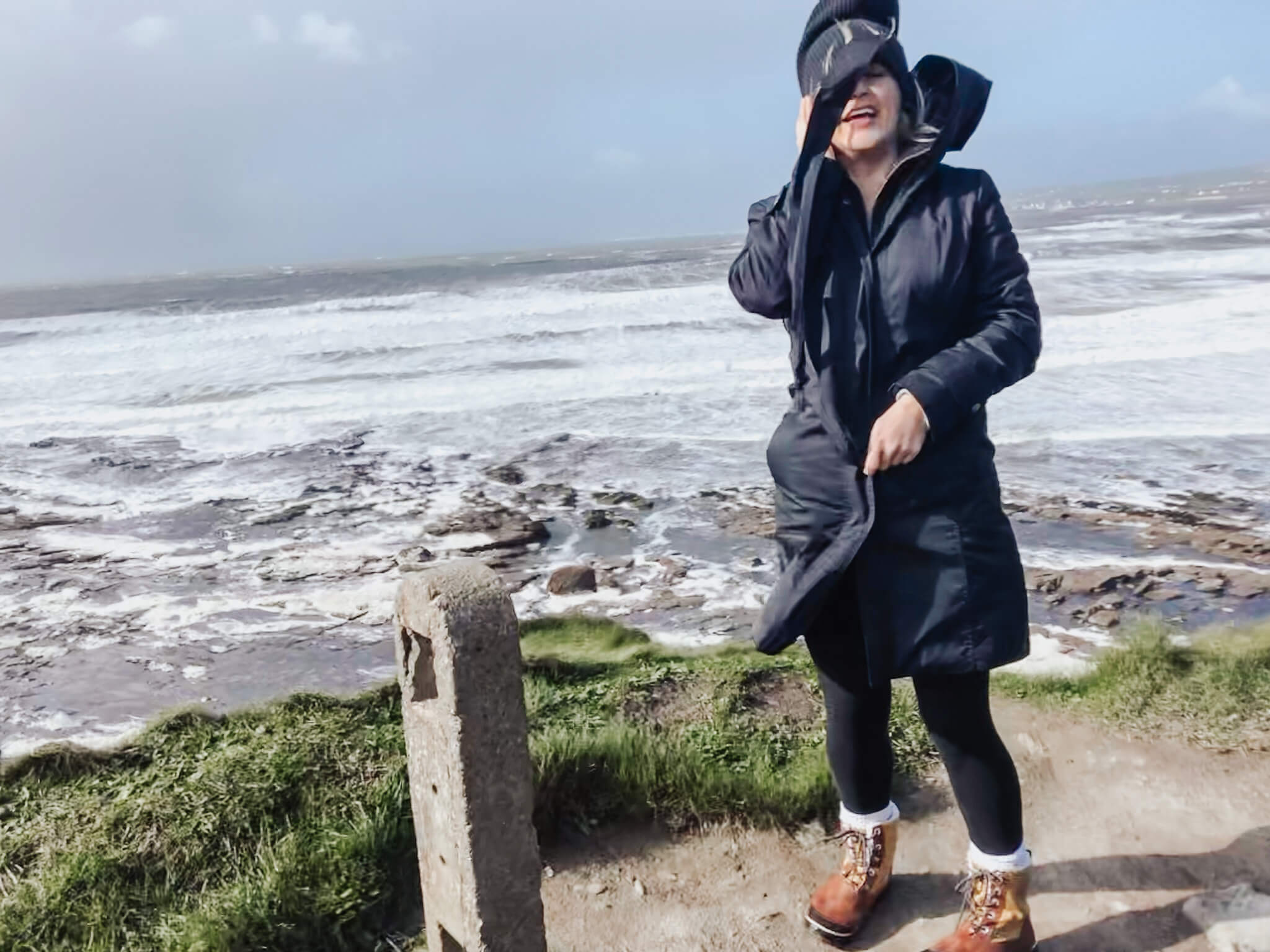
Windy. The first thing that comes to mind is the wind! Second to that is the frequent rain showers.
Rain: Even if you travel during the “dry” season, I would expect a few rain drops to occur sometime on your trip.
Temperatures: In general, the temperatures are mild and are rarely extreme in Ireland since it is an island (except maybe inland during the winter).
- The hottest months are July and August with the average daily highs between 60 and 70 degrees F (rarely exceeding 70 degrees F)
- The coldest months are January and February where the mean daily temps in the upper 30’s or lower 40’s.
With Ireland being an island, the weather can be unpredictable. Check the weather before you go and pack layers!
Other Helpful Ireland Travel Tips!
Now you know the best time to go to Ireland and what to expect with the weather. Here are some Ireland travel tips to help you when you arrive in Ireland!
What Currency to Use?
The Emerald Isle has two different currencies.
Ireland uses the Euro while Northern Ireland adopted the pound when joining the UK.
If you are a cash person, it is in your best interest to have some of both. Many places accept credit card now, but know that if you are just buying drinks or leaving a tip, have some cash.
On the topic of tipping, tipping is expected in restaurants and following a tour guide. 10-15% is generally an acceptable amount. Look to see if it has already been added to your restaurant bill first, though.
Transportation: How to Get Around Ireland?
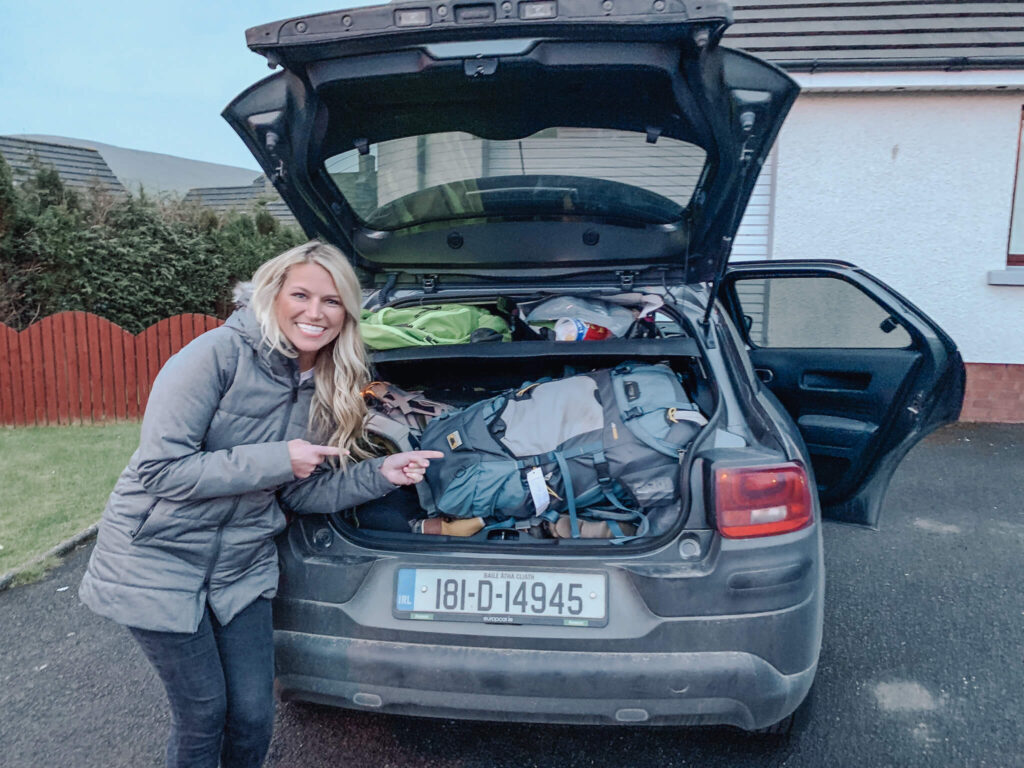
For the BEST trip and ability to see everything Ireland and Northern Ireland have to offer, rent a car! There is a lot of vast landscape and places to see that are most easily accessed by driving yourself.
There is a railway system that connect the main cities. However, a lot of best sites in Ireland are outside of the main cities and will require car or bus to navigate.
For example, you can train to Killarney, but no train travels the Wild Atlantic Way. Therefore, you will need to take a bus tour or drive yourself around the coastline.
If you do rent a car, remember you will be driving from the right side of the car on the left side of the road!
Also remember, things may look closer on a map than they appear. Towns can be quite far apart, so be prepared for quite a bit of driving in Ireland if you do more than Dublin and Galway!
Food and Drinks
The pub culture is one of my favorite things about Ireland! They are so charming, upbeat, lively and generally just fun to hang in.
Obviously, the go-to is a pint of Guinness, but there are also several Irish whiskeys such as Jameson.
But, the whole point isn’t even for excessive drinking. It is for good conversation, camaraderie and the pub experience.
Irish food consists of a lot of stews, cabbages, sausages, potatoes, etc that is very hearty and filling as well as soda bread. You can also find good seafood (seafood chowder is popular) in the seaside towns with fresh oysters being a delicacy!
Book Popular Activities Ahead of Time
If you plan to visit during the summer or another popular time (such as St. Patrick’s Day like us!) you may want to pre-book popular events and sites.
Things like the Cliffs of Moher can book up and we missed out on the Guinness Brewery tour in Dublin because it was sold out!
Everything to know about visiting the Cliffs of Moher!
Pre-book tickets to the Guinness Storehouse!
Everything to know about visiting Dublin on Saint Patrick’s Day!
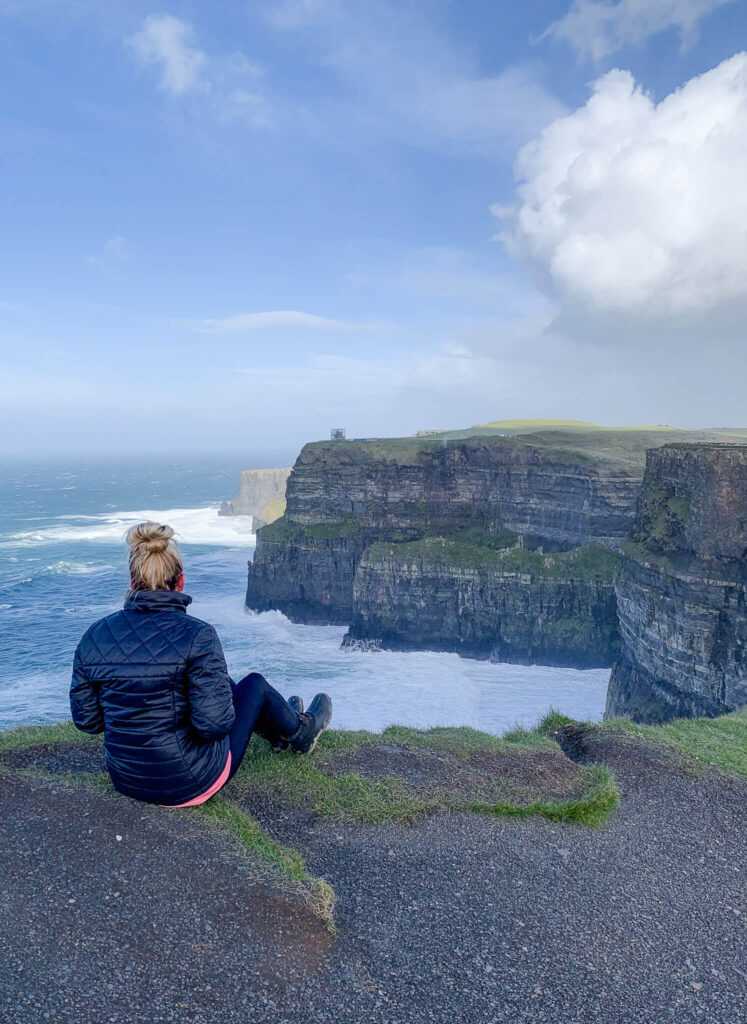
Essentials to Pack for Ireland
It’s hard to say everything you need to pack for Ireland, but some things are going to be pretty important in order to keep yourself dry and not miserable, any time of the year.
Ireland travel tip: As I mentioned, you’ll probably experience rain and/or wind at least once on your trip, so pack essentials to keep you dry and windproof!
Rain jacket: In the drier season (summer: June, July, August), you will likely only need a lightweight rain jacket. In the wetter season (winter: December, January, February), you will need a thick and insulated rain jacket
Waterproof/weatherproof Shoes: Lightweight, waterproof hiking boots if you plan to do outdoor activities. Something more like a Sperry boot will suffice if you don’t plan to hike. If the weather is mild when you are traveling (summer), even a leather sneaker that won’t absorb water will be fine.
Beanie, scarf, gloves: Even if you are visiting during the summertime in Ireland, it’s a good idea to pack at least one of each of these. The high in the warmest months are usually in the 60’s and the lows in the 50’s. At night, with wind gusts, you never know how cold it may feel. Be prepared!
A base layers: This can be thermals pants/shirts, fleece-lined leggings, etc but the wind can be brutal and that wind can pierce a pair of blue jeans and make you miserable quickly.
These may not be essential in the summer, but I recommend packing them for all other months. With the combination of wind, mild temperatures and intermittent rain, a base layer can be your saving grace!
Moisture-wicking Socks: Wet feet are the worst. Get moisture-wicking socks to help keep your feet dry and warm!
Umbrella: An umbrella is useful when walking around, site-seeing in the cities. However, know that the wind can be OUTRAGEOUS, especially along the Wild Atlantic Way and the west coast of Ireland. Leave the umbrella; your rain jacket will be your best friend
Shop


Need a Great Ireland Itinerary?
Looking at a map, you’ll find most of the biggest towns are along the coast of Ireland. To see the most of Ireland, I recommend an itinerary that circumnavigates the island!
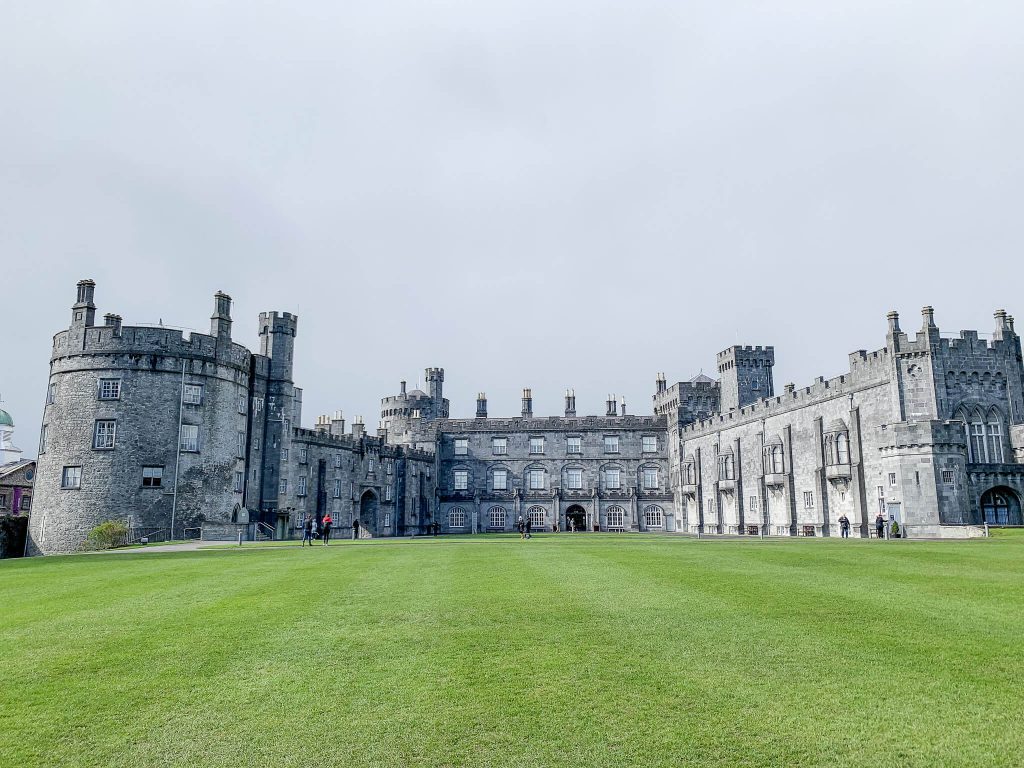
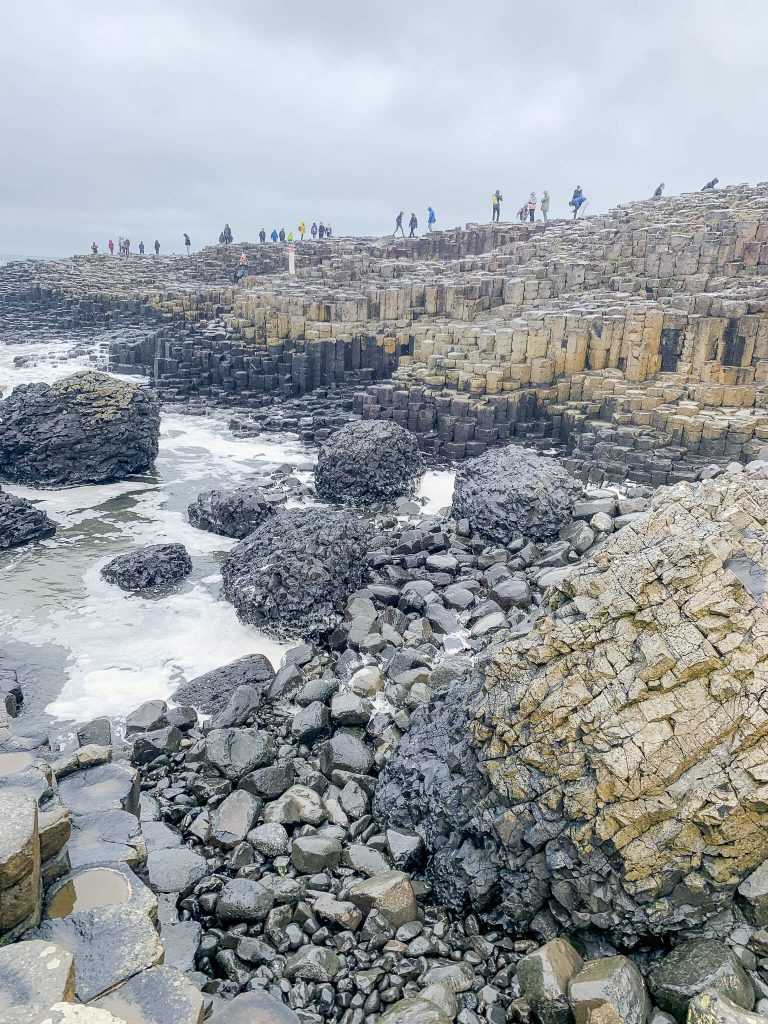
If you start in Dublin, I recommend driving south to see places like Kilkenny, Killarney and the Wild Atlantic Way. Then drive north to Galway and the Cliffs of Moher before making your way to Northern Ireland to see Londonderry/Derry, Giant’s Causeway, Belfast and more!
Here is our full 8-day itinerary circumnavigating the Emerald Isle!

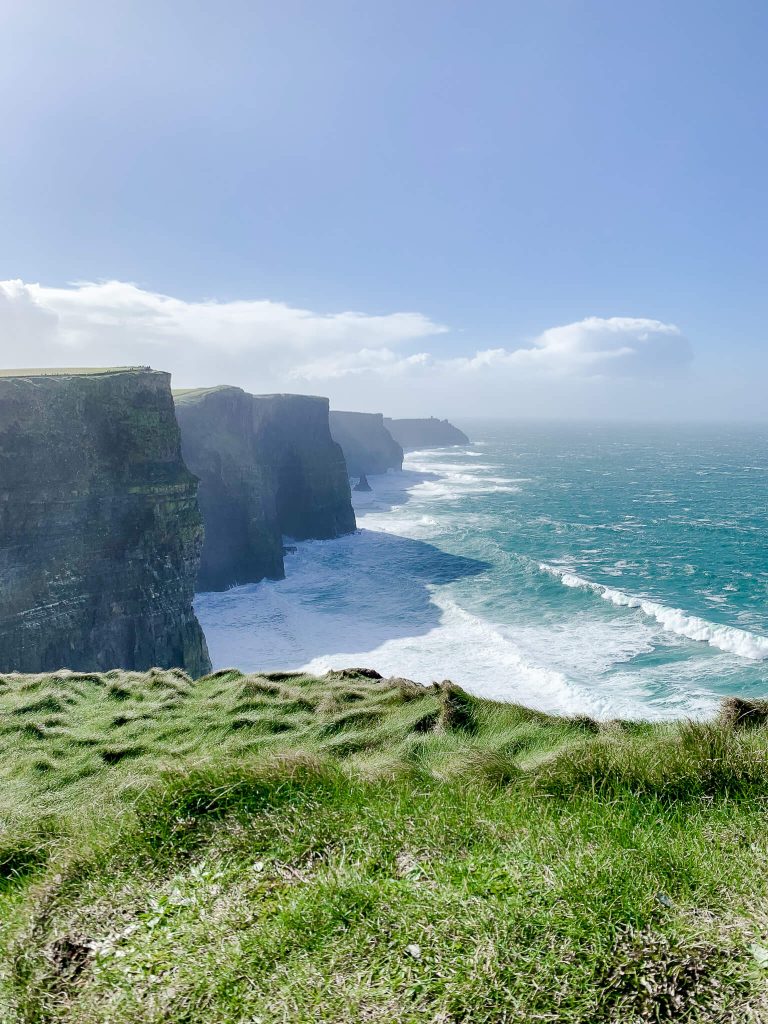
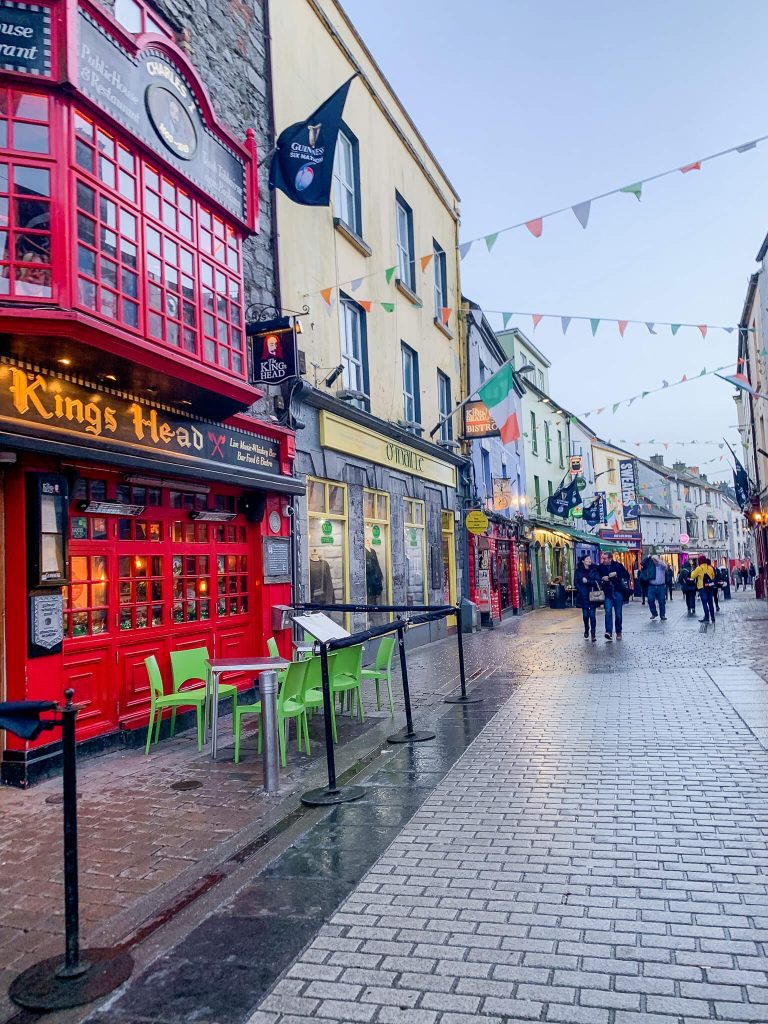
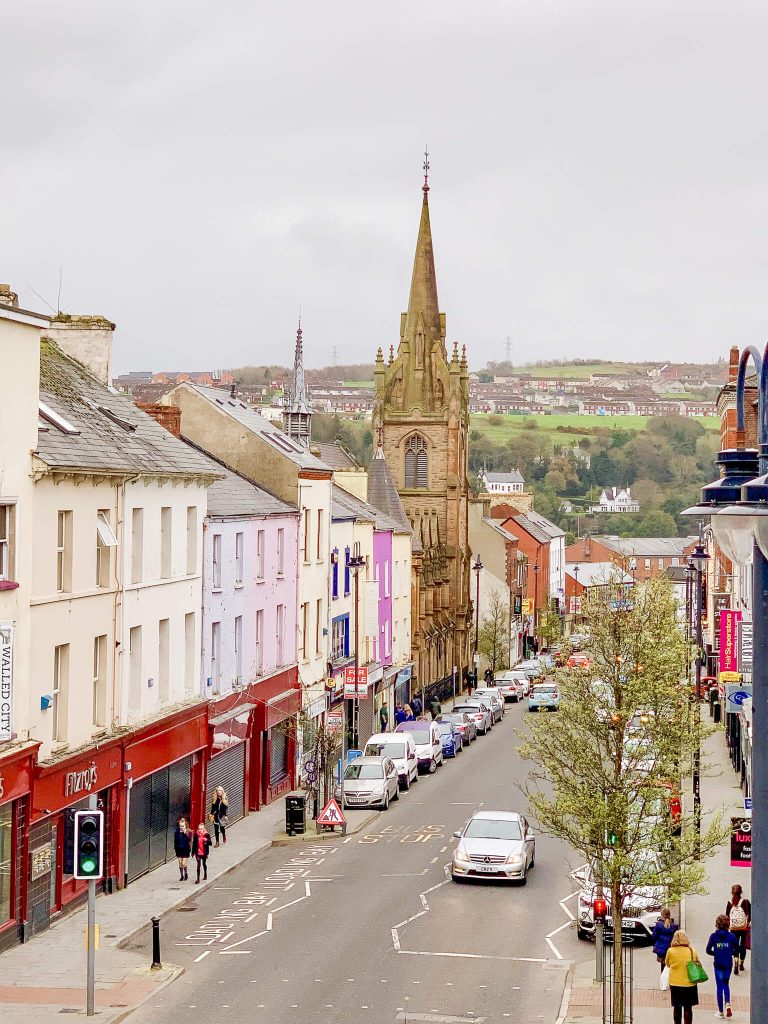
Ireland Travel tips Recap!
Ireland and Northern Ireland offer so much to see, so it is easy to want to over-book yourself; we nearly did it. So, take into consideration drive-time between destinations so you don’t spend too much of your trip driving.
I also highly suggest making sure you plan to visit Northern Ireland as well. I know its easy to want to Dublin and Galway, but Northern Ireland has some very unique landscapes, and, for the love, get out of the big cities as well!
Enjoy your trip to Ireland! It truly has one of the funnest cultures!
Save to Pinterest